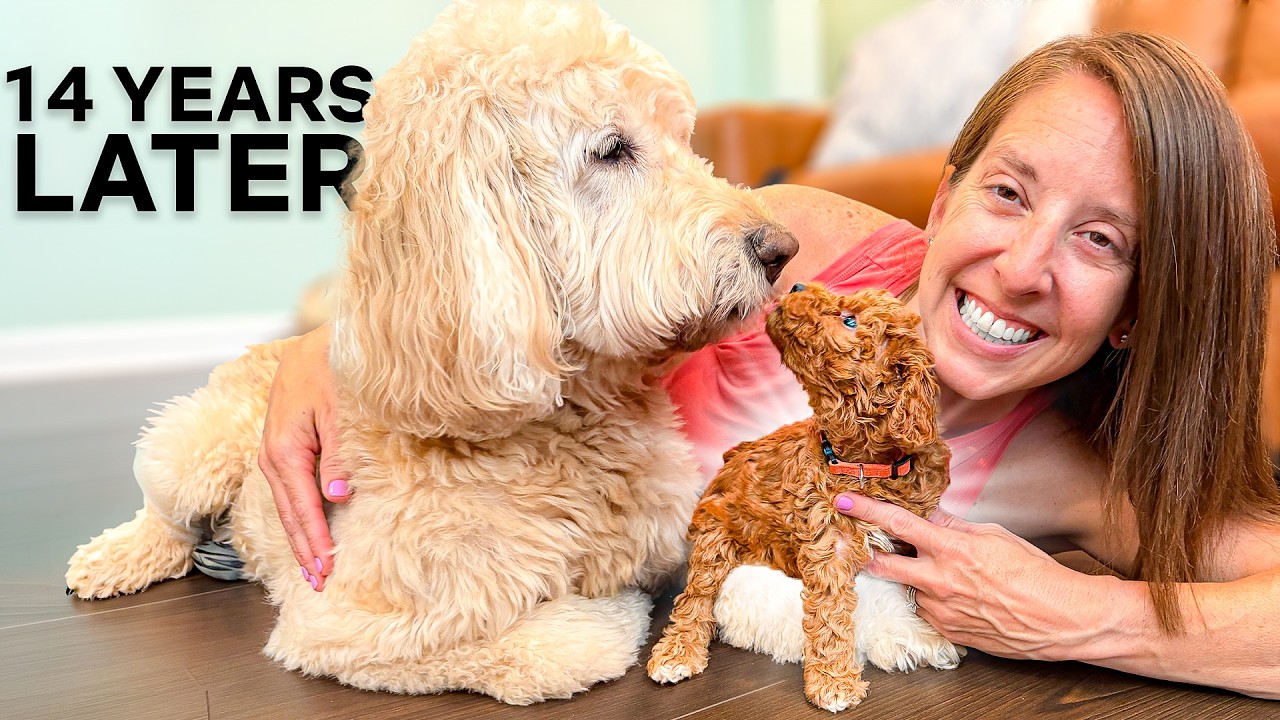
I Do This to Every Puppy for 14 Days — Here's Why
Most breeders hand you a puppy at 8 weeks and wish you luck. We start on Day 1.
From the moment our puppies are born, we begin a deliberate daily protocol that most puppy buyers have never heard of. It's called Early Neurological Stimulation, or ENS. And in 14 days, it changes everything about how a puppy handles the world.
This post walks you through exactly what we do, why we do it, and what you'll notice in your Goldendoodle because of it.
What Is Early Neurological Stimulation?
Early Neurological Stimulation — ENS — is a series of five simple exercises performed on newborn puppies once a day, starting at Day 3 of life and running through Day 16. Each exercise takes just five seconds. The whole session takes about a minute per puppy.
It was originally developed in the 1970s as part of a U.S. military program designed to produce higher-performing working dogs — dogs used for detection, search and rescue, and military service. Researchers found that introducing mild neurological stress during a specific developmental window produced puppies that were calmer under pressure, recovered faster from stress, and developed stronger immune and cardiovascular systems.
That same science applies to every puppy — including your family's Goldendoodle.
"We like to call it puppy confidence boot camp. It sounds fancy. It really isn't. It's five positions, five seconds each. But what it does to a puppy's nervous system is remarkable."
— Erin, Doodles of NC
The Five ENS Exercises
Each position is held for exactly five seconds. Nothing more. The goal isn't to stress the puppy — it's to introduce a mild, controlled neurological stimulus during the window when the developing brain responds most powerfully.
• Head up — The puppy is held with its head pointing upward, perpendicular to the ground.
• Head down — The puppy is held with its head pointing downward, the opposite of natural orientation.
• Supine (on their back) — The puppy rests on its back, fully relaxed in the palm of the hand.
• Thermal stimulation — The puppy is placed on a cool surface — we use a cool pack — for five seconds.
• Tactile stimulation — The puppy's paws are gently stimulated on a textured surface.
That's the entire protocol. Five positions. Five seconds each. Every day for 14 days.
What changes isn't the exercise itself — it's the puppy's response to it. On Day 1, most puppies resist at least one position. By Day 14, most of them barely flinch.
What We See Day by Day
The transformation doesn't happen overnight, but it is measurable and visible. Here's what we actually observe across 14 days with our litters.
Days 1–4: Establishing the Baseline
The first few days are about getting every puppy accustomed to being handled. Eyes and ears are still closed. Most puppies have a strong resistance to the upside-down position and the cool pack — both of which feel foreign and mildly startling. We track which puppies fight it and which ones settle quickly. That early data tells us a lot about each puppy's baseline temperament.
We also do daily weight checks during this period. Every puppy should be gaining consistently. A flat or dropping weight is a signal that a puppy needs extra support — more time with mom or supplemental feeding. We don't skip this step.
Days 5–7: The First Shifts
Around Day 5, we start seeing the first real changes. Puppies that were fighting the cool pack on Day 1 are beginning to tolerate it. The sessions are getting shorter simply because the puppies are settling faster. We track these changes by collar color for every puppy in both litters.
Days 8–10: Eyes Open
One of the most visible milestones in puppy development happens right here. Around Day 10 or 11, eyes begin to open. Their world gets dramatically larger overnight. The ENS sessions start to feel completely different — where Day 1 was full resistance, most puppies are now calm within a second or two of each position.
Something else starts happening during this window. The puppies begin recognizing Erin's voice. They'll lean into her when she picks them up. They seek her out. This is the beginning of human bonding — and ENS is part of what makes it happen so early and so naturally.
Days 11–14: A Different Puppy
By Day 11, the sessions feel almost effortless. What used to take 15 minutes per litter takes about seven — not because we're rushing, but because the puppies simply aren't fighting it anymore. Their nervous systems have adapted. The stress response that was firing hard on Day 1 has been calibrated into something manageable and controlled.
The Day 14 final session is one of our favorite moments. We put the same puppy that was squirming on Day 1 onto the cool pack. Five seconds. Nothing. No resistance. Just calm.
That's the whole point.
"Day 14 looked nothing like Day 1. Not because we did anything dramatic — but because we showed up every single day and did something small. That's what this protocol is. Small, consistent, deliberate."
— Erin
Why This Matters for Your Family
You might be wondering what any of this means for the puppy coming to live in your home. Here's the practical answer.
• A puppy raised with ENS is more likely to recover quickly from startling sounds, unfamiliar environments, and stressful situations — the vet's office, a crowded park, a thunderstorm.
• ENS-stimulated puppies tend to be more adaptable to new people, new surfaces, and new experiences. This makes the early socialization weeks (8–16 weeks) significantly more effective.
• Research shows ENS puppies demonstrate stronger cardiovascular performance, greater disease resistance, and improved stress recovery compared to non-stimulated litters.
• The early human bonding that develops during ENS — puppies associating touch and handling with calm and safety — is a head start on the trust your family will build with your dog for life.
We don't do this because it's trendy. We do it because after 13 years of breeding Goldendoodles, we know the difference it makes — in the puppies we send home, and in the families who raise them.
This Is What an Ethical Breeder Looks Like
ENS is one part of a much larger commitment we make to every puppy born at Doodles of NC. From the moment a litter arrives, we are tracking weights, monitoring development, handling every puppy daily, and building the neurological and emotional foundation your dog will carry for the rest of its life.
Most of this work happens before you ever meet your puppy. Most of it is never seen. But it shows up — in how your dog handles its first vet visit, its first thunderstorm, its first day at a busy dog park.
That's what we're building, one five-second exercise at a time.
Interested in a Doodles of NC Puppy?
If you'd like to bring home a puppy that starts life with this level of care, we'd love to connect. Our litters go quickly and our waitlist is how we stay in touch with families who are serious about the right fit.
Join our waitlist: doodlesofnc.com
Follow our litters on Instagram: @doodlesofnc
Watch more on YouTube: youtube.com/@doodlesofnc